
Historical Context: Slavery

- First Shots of the Civil War (1861): U.S. Major Robert Anderson occupied Fort Sumter in December 1860. This occurred after South Carolina seceded from the Union. His actions initiated a standoff with the state’s militia forces. Confederate General P.G.T. Beauregard bombarded Fort Sumter on April 12, 1861, kicking off the Battle of Fort Sumter. After a 34-hour exchange of artillery fire, Anderson and 86 soldiers surrendered the fort on April 13. Learn much more from History.com: Fort Sumter.
- Emancipation Proclamation (1863): President Abraham Lincoln issued the Emancipation Proclamation on January 1, 1863. He announced, “that all persons held as slaves” within the rebellious areas “are, and henceforward shall be free.” Read the full document from the National Archives. President Abraham Lincoln’s Emancipation Proclamation, effective January 1, 1863, was a step toward abolishing slavery. Yet, it did not apply to the loyal border states. It also exempted parts of the Confederacy that had already come under the control of the Union Army.
- National Archives: AMENDMENT XIII (1865)
Passed by Congress on January 31, 1865. Ratified December 6, 1865.
The Thirteenth Amendment abolished slavery throughout the United States and its territories. - National Archives: AMENDMENT XIV (1868)
Passed by Congress on June 13, 1866. Ratified July 9, 1868.
The Fourteenth Amendment granted citizenship to the liberated former slaves and their offspring. - United States v. Wong Kim Ark, 169 U.S. 649 (1898)
National Constitution Center: “Ratified in 1868, the Fourteenth Amendment opens with the Citizenship Clause. It reads, “All persons born or naturalized in the United States, and subject to the jurisdiction thereof, are citizens of the United States and of the State wherein they reside.” The Supreme Court addressed the meaning of this key provision in United States v. Wong Kim Ark. Wong Kim Ark was born in San Francisco to parents who were both Chinese citizens. At age 21, he took a trip to China to visit his parents. When he returned to the United States, he was denied entry on the grounds that he was not a U.S. citizen. In a 6-to-2 decision, the Court ruled in favor of Wong Kim Ark. He was born in the United States. Moreover, his parents were not “employed in any diplomatic or official capacity under the Emperor of China.” The Citizenship Clause of the Fourteenth Amendment automatically made him a U.S. citizen. This case highlighted a disagreement between the Justices over the precise meaning of one key phrase in the Citizenship Clause: “subject to the jurisdiction thereof.”
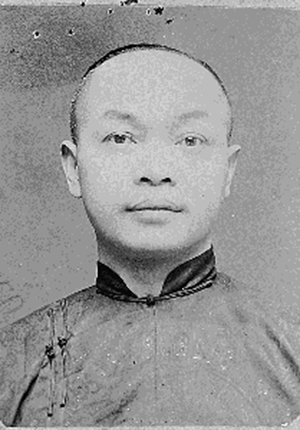
National Archives
Original Intent
Learn about the debates about original intent in The Original Meaning of the Fourteenth Amendment, available online in PDF format. Copyright © 2021 by the President and Fellows of Harvard College
FACING HISTORY & OURSELVES: Congress Debates the Fourteenth Amendment — Quotations from the 1866 congressional debate over the Fourteenth Amendment help students clarify what the amendment says and its significance.
The central people group intended to benefit from the 14th Amendment was the former slaves. I quote from Rep. Thaddeus Stevens (Republican from Pennsylvania) comments on Section 1:
““[Section 1] allows Congress to correct the unjust legislation of the states, so far that the law which operates upon one man shall operate equally upon all. Whatever law punishes a white man for a crime shall punish the black man precisely in the same way and to the same degree. Whatever law protects the white man shall afford ‘equal protection’ to the black man.”
What about the Chinese people, the Mexican people, and the Canadians?
Let’s remind ourselves of the recent history of the brutal Civil War in which approximately 620,000 Americans died. I quote from History.com: “For more than a century, the most-accepted estimate was about 620,000 dead. A specific figure of 618,222 is often cited, with 360,222 Union deaths and 258,000 Confederate deaths.”
These American lives purchased the freedoms of enslaved black people. The arguments were not about the status of the American Indian people, Spanish mariners, or the Eskimos. The arguments were about the natural rights given by God to all people, regardless of skin pigmentation.
Nothing in the 14th Amendment specifically qualifies only black pigmentation former slaves and their progeny.
Bureaucracies do what they will when Congress fails its duty to legislate. Absent appropriate Acts of Congress, the bureaucrats feel compelled to act. I point the reader to the United States Senate Committee on Homeland Security and Governmental Affairs: BIRTH TOURISM IN THE UNITED STATES. Learn about Birthright Citizenship and Birthright tourism.
It takes a Constitutional Amendment to change or repeal an earlier Constitutional Amendment. I can foresee an intelligent Supreme Court starting afresh. They would ignore past statements except those of the writers of the 14th Amendment, in particular, Section 1.
In conclusion
Birthright citizenship was never intended by its authors to invite birthright tourism. The Congressional debates occurred during the Civil War. There were Acts of Congress. Continued social segregation persisted throughout the Southern states. All to the advantage of former slaves and their children.
I can attest to the fact laws were not equally applied to blacks as they were applied to whites.
John White
Rockwall, Texas

 John N. White