
Question
The Democratic Party criticizes President Trump’s actions. He is addressing astonishing corruption within the Deep State, which is bankrupting our national treasury. Democratic attorneys general sue the President to stop trimming the fat in the federal government.
Who holds the highest authority? The Judiciary, the Executive Branch, or the Legislative Branch?
The Origin of the Separation of Powers
Our founding fathers learned the separation of powers from the Bible. The Bible describes the City of Zion in Isaiah 33:20-22. Verse 22 describes three branches of divine government. These branches inspired the Founding Fathers to craft the first three articles of the U.S. Constitution:
for the Lord is our judge, [the Judiciary]
the Lord is our lawgiver, [the Legislator]
the Lord is our king [the Executive]
- Article One defines the Legislative Branch.
- Article Two defines the Executive Branch.
- Article Three defines the Judicial Branch.
What is the ultimate authority of the Federal Government? Learn from the Preamble to the Constitution.
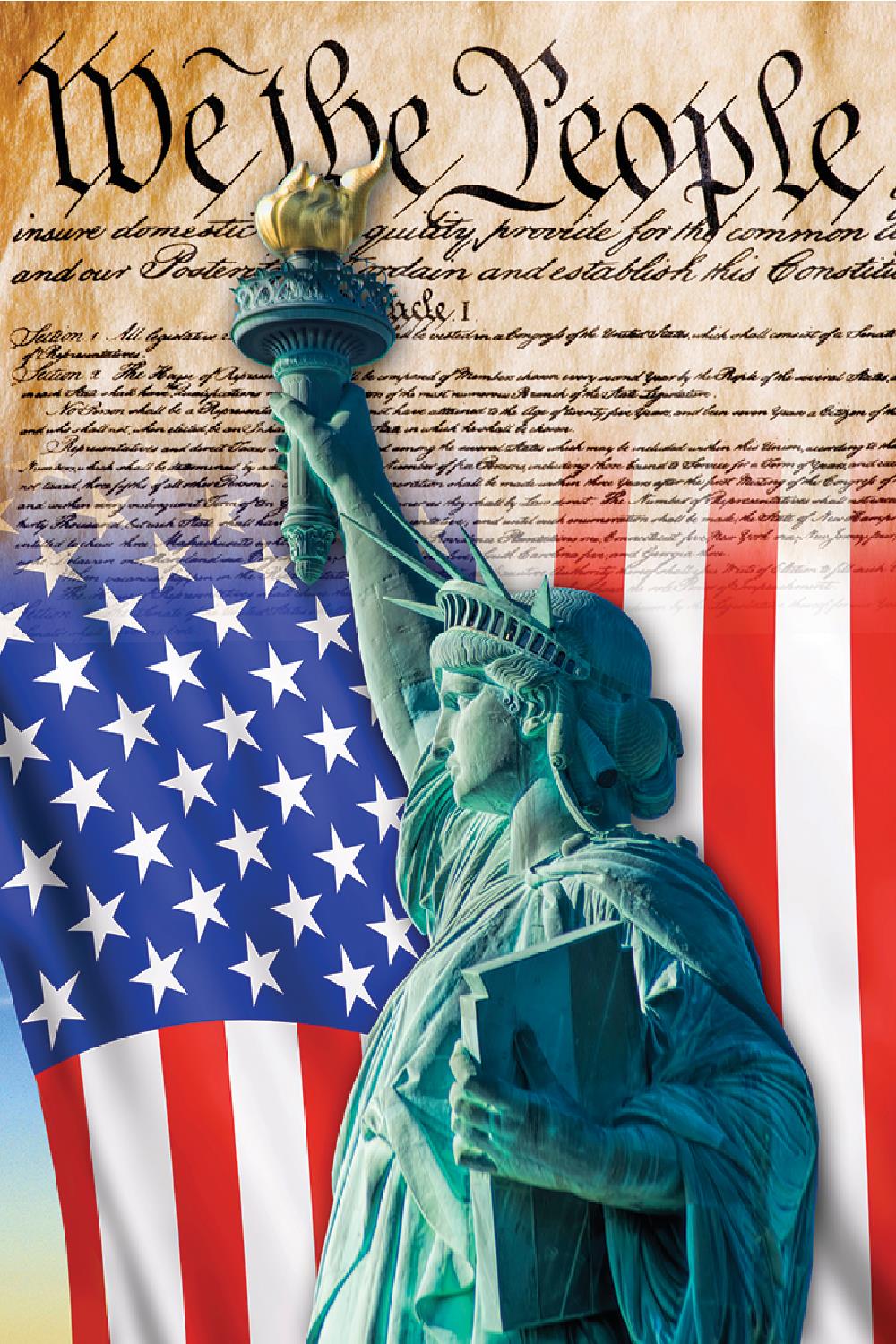
We the People of the United States, in Order to form a more perfect Union, establish Justice, insure domestic Tranquility, provide for the common defence, promote the general Welfare, and secure the Blessings of Liberty to ourselves and our Posterity, do ordain and establish this Constitution for the United States of America.
The Division of Powers
The Tenth Amendment, the last of the Bill of Rights, affirms that we have no kings. It states that no single branch of the Republican form of government stipulated in Article 4, Section 4, is a supreme power. It says:
The powers not delegated to the United States by the Constitution, nor prohibited by it to the States, are reserved to the States respectively, or to the people.
The Judiciary’s Limited, Constrained Role
Thomas Jefferson strongly rejected the idea that the judiciary had exclusive and final authority to decide all constitutional questions. Writing to William Torrance, he made this clear:
“Certainly there is not a word in the constitution which has given that power to them more than to the Executive or Legislative branches.”
Most people today think that all constitutional questions are only answered by the Supreme Court. And – as a result, their view is not that the Constitution means what the Constitution says, or what the founders and ratifiers told us it means, but instead, the constitution means what the supreme court says it means – until it changes its mind.
But that’s not even close to the system of the founders under the constitution. It’s much closer to the British system they fought a long, bloody war to secede from.
In a letter to William Charles Jarvis, Jefferson called that system an oligarchy:
“You seem … to consider the judges as the ultimate arbiters of all constitutional questions: a very dangerous doctrine indeed and one which would place us under the despotism of an Oligarchy.”
We the People and the States are the ultimate authorities.
Knowledge is Power!
 John N. White