
Judicial Review
Judicial Review is a power assumed by the Judiciary Branch in Marbury v. Madison. “The U.S. Supreme Court declared an act of Congress unconstitutional, thus establishing the doctrine of Judicial Review.”
Judicial review is a process under which a government’s executive, legislative, or administrative actions are subject to review by the judiciary.[1]: 79 In a judicial review, a court may invalidate laws, acts, or governmental actions that are incompatible with a higher authority.
Conflicts of Interest

Under our second president, John Adams, John Marshall was Secretary of State. Under our third president Thomas Jefferson, John Marshall was appointed Chief Justice of the Supreme Court. The controversy was over the appointments by President John Adams, people not wanted by the president-elect Thomas Jefferson. The appointment of John Marshall to the Supreme Court led to two major consequences. One was the establishment of the case law of Judicial Review. The other was the realignment of the constitutional authorities of the three branches into “three co-equal branches of government.” [For further reading on the latter consequence: Constitution Minute—The Myth of the Separation of Church and State]
Article VI defines the Supreme Law of the Land.
This Constitution, and the Laws of the United States which shall be made in Pursuance thereof; and all Treaties made, or which shall be made, under the Authority of the United States, shall be the supreme Law of the Land; and the Judges in every State shall be bound thereby, any Thing in the Constitution or Laws of any State to the Contrary notwithstanding.
Case Law
“Case law, also used interchangeably with common law, is a law that is based on precedents, that is the judicial decisions from previous cases, rather than law based on constitutions, statutes, or regulations. Case law uses the detailed facts of a legal case that have been resolved by courts or similar tribunals.”
How does case law qualify as the Supreme Law of the Land? Can unconstitutional judicial precedents lawfully amend the U.S. Constitution?
Amending the Constitution
The Congress, whenever two thirds of both Houses shall deem it necessary, shall propose Amendments to this Constitution, or, on the Application of the Legislatures of two thirds of the several States, shall call a Convention for proposing Amendments, which, in either Case, shall be valid to all Intents and Purposes, as Part of this Constitution, when ratified by the Legislatures of three fourths of the several States, or by Conventions in three fourths thereof, as the one or the other Mode of Ratification may be proposed by the Congress; …
Article V of the U.S. Constitution, the second clause
Conclusion
There is no constitutional basis for judicial review whereby “a court may invalidate laws, acts, or governmental actions that are incompatible with a higher authority.”
“If in a limited government the public functionaries exceed the limits which the constitution prescribes to their powers, every such act is an act of usurpation in the government, and, as such, treason against the sovereignty of the people, which is thus endeavored to be subverted, and transferred to the usurpers.”
St. George Tucker, attorney, Revolutionary War veteran, and legal scholar
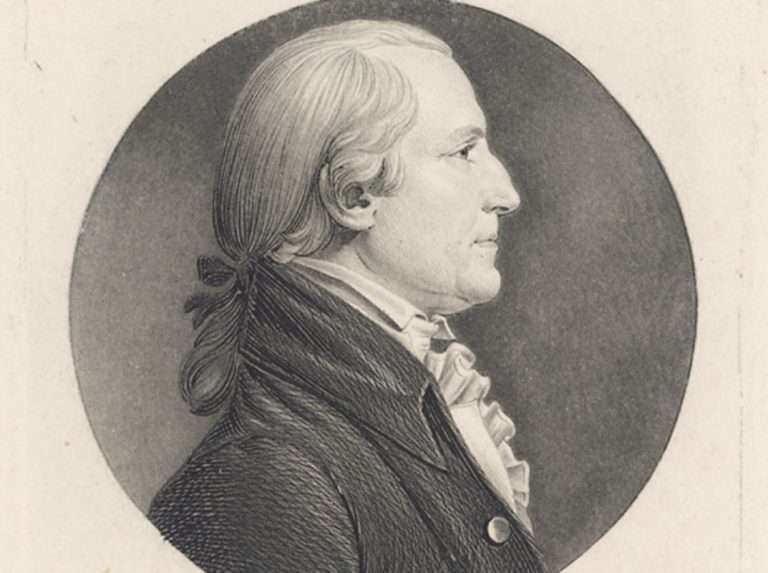
Attorney St. George Tucker held conflicting viewpoints on the constitution. He acknowledges that judicial overreach is tantamount to usurpation of the Supreme Law of the Land. Yet, he also advocated for Judicial Review as a federal judge.
Article III of the U.S. Constitution defines the judicial branch’s duties and limits of authority. It does not appoint the power of the judiciary over the other two branches of government.
John White
Rockwall, Texas

 John N. White